2011年3月20日日曜日

Okinawa Exile #3: Black Humor / 沖縄#3:黒光

Things are calming down. The disasters in Japan are last week's news for the major American news sources, and even Japanese television has returned to its rotation of melodramas and insipid game shows. Today I had a another 'first talk since this all went down" with a Japanese friend, an Okinawan woman in grad school in Tokyo. She laughed as if she was letting out a long-held breath: "There's a lot to talk about, so let's get a drink when you get back to Tokyo."
ちょっと落ち着いて来たね。アメリカのニュースでは日本の被災よりリビア、日本のテレビでも芸能人の番組が戻って来た。地震、津波、などが起こってから話ができなかった友達と電話で話すと、ほっとした笑い声で:お疲れさま。また東京に着いてから飲みにいこう。

The situation is still very serious in the Northeast, but it sounds like there's room for some laughter there, too. My friend in Sendai reported that there is a healthy does of gallows humor.
まだまだ東北は大変。それでも、仙台にいる友人とチャットで冗談を書いたりできると。。。宮城でもブラックユーモアが盛んだって。

A pregnant friend in Tokyo responded to a worried text of mine that she was not panicking, but picnicking. There's been all kinds of talk about Japanese stoicism in the face of this crisis, many Western observers doing all but coming straight out with the phrase "Samurai spirit." Spare me. There are cultural reasons for the relative calm in Japan, but they have specific historical reasons. A quick refresher course in the public reaction to the Great Kantô Earthquake of 1923 (murder of ethnic Koreans and socialists) will remind us all that there is no unbroken line between the Japanese aristocracy of the Tokugawa Era (1600-1868) and the average middle-class Japanese citizen. But now I'll put the little historian in me back in her box.
東京にいるもう一人の妊娠している友達のメールによると今はパニックよりピクニックだって。いいね、日常生活が戻ると。武士の精神より日常の魅力じゃないですか?

Black humor in Miyagi. Black outs in Tokyo. Black moods here and there. And... a sneaking suspicion that I may be lactose intolerant, leaving me staring into my cup of black black coffee.
宮城にブラックユーモア。東京にブラックオウット。機嫌もたまに黒くなるさー。それで、最近牛乳が飲めない私がコーヒーをブラックで飲みながらいろいろ考えさせる。

So no more cream for me for a while. I feel inspired to give a black dinner, like Esseintes in À rebours. His feast of all-black dishes was given to mourn his lost virility; mine would be to mourn the passing of my voracious omnivorousness. Of course, I can barely believe my enormous good fortune that it is my luxury to lose so little when others have lost so much.
もちろん、牛乳をもう飲めないということはいやだと思っても、ラッキーだなーと考えざるを得ない。

Great also is my fortune that Okinawa's access to fruits of the sea offers me access to squid ink of the deepest blue-black.
沖縄に黒くてもおいしいものあるということもラッキーね。イカスミにはまっている。

I mentioned my desire to cook with squid ink to newly befriended mainland Japan expat, as I sipped my coffee (hold the cream) in a snug stall at the Sakae Machi Market. She guided me over to her favorite fish monger, and he gave be a small bottle of squid ink. He insisted that he had gotten it as a gift, so I shouldn't pay for it. I bought some salmon steaks from him to make it easier to accept his generosity.
イカスミ使って料理を作りたいと栄町市場のカフェで出会ったばかり女性にいうと、魚屋さんに連れて、イカスミをもらちゃった。
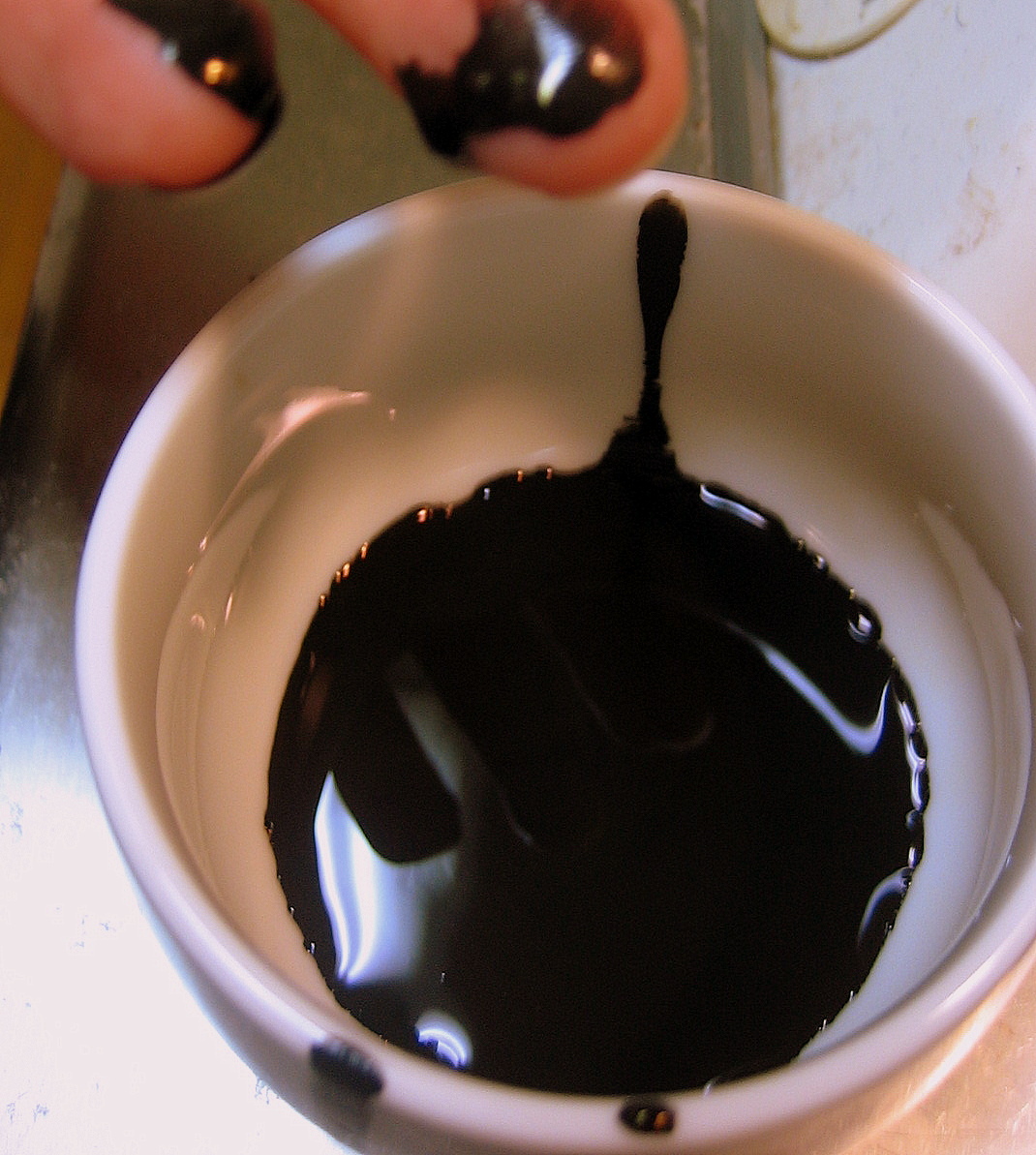
The squid ink truly resembled ink, and tasting it straight offered a salty flavor, deep in umami.
本当に炭のようなイカスミをストレートで味見すると:うまみが深い。

The fishmonger had recommended that I cut the ink with awamori (distilled rice liquor). I added both the ink and the awamori to some sauteed onions and garlic.
泡盛で薄めると魚屋さんに言われた。ですので、イカスミと泡盛をソテーしたタマネギ、ニンニクに入れた。
I had bought some fresh Okinawa noodles, and was eager to besmirch them in this black goo.
新鮮な沖縄そば麵で食べよう!

Rotating pans on the single burner, I also managed to make a light miso soup, using the yomogi and taaimo from my previous post:
みそ汁も先のよもぎ、ターイモを使って、作った。
The salmon was pan fried with salt, brown sugar, black pepper.
サーモンを塩、黒砂糖、コショウで焼いた。

Because I could not really bear such a somber mood, I introduced a bit of play to the meal. Our "green" for the meal would be "sea grapes," another variation on the theme of seaweed.
「サラダ」と言えば、海ぶどうも出した。
I plucked a couple of nasturtiums from the little plant I had bought to brighten my temporary lodgings. The nasturtiums that are plentiful here in Naha evoke California for me, and offer a hint of familiarity within the unfamiliar. I guess I can't seem to give myself over entirely to the black arts...
借りた部屋を明るくするために買ったノウゼンハレンの花も使った。那覇によく見えるノウゼンハレンで出身のカリフォルニアを思い出す。。。

The plate was plenty exotic, dark, and mysterious, however...

It proved to be a delicious harvest from the sea that surrounds us:
It yields darkness...
人生に暗いところもあれば。。。
And it yields life...
いきいきしてるところも。

Over the past few days I've thought a lot about the terrifying rapidity of destruction, and how much longer... frustratingly longer... it takes to build, sow, and reap. It feels like chaos and confusion, uncertainty and danger, are never really that far away.
最近、被災の影響でよく人生の暗いところについて考えてしまう。被災は早い、また人生を立つのは時間がかかる。だれの人生にも、不安、闇、カオス、危険は思うより近いじゃないですか。
It's a tired observation, I guess. But I've never felt it with such urgency. Don't wait until tomorrow to call your friend back. Don't put off that visit. Don't postpone life.
それでも、って言ったら。。。それこそ人生は毎日いきいきと生きるしかないじゃない。言葉でうまく表現できないので。。。

But please, please: also let yourself have the patience for it.

Obligatory end shot of happy colors.
食卓で表現します。

Ever so humbly: Itadakimasu.
いただきます。

2011年3月19日土曜日

Okinawa Exile #2: Get to Work, Girl / 沖縄#2:働きは人の動き

Has it really been a week? It's been more than a week since I arrived in Okinawa and since The Earthquake, which has undergone a degree of mythification already in under ten days.
もう一週間経ったの?早いは遅いか。。。時間の感覚がないね。

I've spent afternoons staring at my materials, trying to get my head and heart back into my academic work. I'm so absentminded though... I even forget sometimes about eating. I though that was not possible.
勉強しようと思っても集中できない。あるときでもぜんぜん私らしくないけど食べることさえ忘れるときもある。

Today I got calls from some friends in Tokyo. The news must be full of stories about foreigners fleeing. One friend was so calm that she made me feel ashamed that I didn't return to Tokyo already. Another made me promise that I wouldn't let anyone keep me from returning to Tokyo in April. I told her I have every intention of returning: I still have food in the fridge! A third sounded so exhausted and troubled. She just gave birth to her first child two weeks ago and between this new life in her care and the constant aftershocks, she has little time to process the news she hears.
今日は東京の友人の三人からの電話があった。ニュースで外国人が東京から逃げているというニュースが流れているかも。私も東京にいないと悲しい。一人の友達は赤ちゃんを産んだばかりところで、ニュースを見てたら、何が事実かということで悩んで、とても不安らしい。

"Is it true?" She asked me, "Is it true that the Japanese government is lying and all the foreigners are leaving Tokyo?" I didn't know what to say -- mostly because I don't know what is true, and suspect the truth lies somewhere between the ultra-calm Japanese news and the hysterical American broadcasts -- but I told her she might rest easier if she can relocate to the West for a little while.
事実がわからない私にもアドバイスを言うのは難しいけど、不安があったらしばらく関西の方に行って、待てばって言った。大変でしょう、お母さんになったばかりところで。

As I talked with her, I was walking in a park in Naha that smelled warm and sweet. Okinawa is closer to Taiwan (the relocation destination for many US nationals opting to be evacuated by the embassy) than to Tokyo. Life goes on here, as it does in most places around Japan. The actual danger is local, but the fear and anxiety affects many more...
那覇は東京から遠いけど。。。

Other good news, today, though. Christopher in Miyagi was able to get some beer yesterday. I wish I could send him some; I worry about him getting enough Vitamin B. There is no lack of that in Naha, and certainly the awamori -- the local liquor distilled from rice -- continues to flow. The famed Okinawan hospitality is most likely one part exotic fantasy... but it's also one part awamori.
仙台にいる友人はとてもお酒好きで、ビールも宮城に送りたいと思うときある。沖縄にはビールも、泡盛も少なくないから。。。

I had the enormous fortune to enjoy Okinawan hospitality the other evening. In my last post, I mentioned the great affection I've begun to develop for my local market during the day. I decided that I wanted to see it by night, and I enjoyed the warm and drunken company of (not to mention the chilled and drunk-making awamori from the bottles of) the local color. This included a woman who insisted that I come in to her greasy... chopstick?.. diner in the market and learn how to cook Okinawan food.
この間、夜の栄町市場に出かけて、那覇の心の暖かさと泡盛の強さを体験できた。それで、出会ったおばさんが食堂をやっているので、沖縄料理を習いに誘った。

Here she is (in red) as part of a group called the "Rapping Grannies," who perform at events around Naha.


So I showed up the next morning, even with the lingering awamori still a little angry behind my eyes.
それで、次の日はここでお皿洗いとして入りました。


These ladies -- blurry because they are constantly in motion -- put me in an apron and behind the counter. I washed dishes, prepped veggies, and watched them work their magic.
お皿を洗ったり、野菜を切ったり、それでこのおばさんたちのキッチン魔法を見学した。

After a long morning of work, I felt quite proud of myself. One of my friends asked if maybe I've lost focus... after all, a week ago I was writing my Ivy League PhD, and now I'm washing dishes at the local buffet just to get my lunch. Priorities shift, you know?
先週は博士論文。今週は皿洗い。人生そんなもん。

Their version of the juicy (pronounced "joo-shii") included yomogi, which I'd only had in sweets before. After my shift, I prowled the market to find this fragrant green.
沖縄のジューシーという料理はチャーハンのようなもので、ボロボロジューシーはお粥似。ここの食堂のボロボロジューシーによもぎが入った。今までよもぎの経験はよもぎ餅に限られた。おいしくておしくて、私も使いたいようになった。

Yomogi translates to "mugwort," which is a pretty witchy term for a vegetable. And, suitably, my witchy leafy green woman at the market had it on sale.

It is so fragrant, and kind of woodsy. It does feel witchy and medicinal. In a wonderfully savory way.
不思議な香りを持つよもぎ。

I also saw some starchy roots that interested me. Taaimo:
この根も珍しいと思って、買ってしまった。ターイモです:
Sayaka told me that many prewar texts on Okinawa mention these humble roots, which are "potatoes" that can grow in rice fields, and were a fall-back food for Okinawans facing starvation.

I decided to cut and fry the taaimo, and make a boro boro juicy -- a kind of congee, or rice gruel -- with the yomogi.
それで、今晩のご飯はよもぎボロボロジューシーに揚げたターイモ。

It's funny: rice gruel sounds disgusting, but the Japanese term for congee -- okayu -- sounds comforting. Like a nourishing bowl of chicken soup.
不安な時にお粥がいいでしょうね。

I visited my fish monger, and got some fish to pan fry.
それに魚も。。。

Got home and soaked the taaimo in salt water:

I pan-friend these puppies:

I pan-fried the fish with garlic, soy sauce, and (hair of the dog!) awamori:
魚にニンニク、醤油、泡盛。
And made the juicy with fish stock, rice, yomogi, miso and a little sugar:
ジューシーに鰹節、ご飯、よもぎ、みそ、お砂糖。

It was St. Patrick's Day, so I had to add some green:
緑も少し。。。
We had an Irishman with us, so the faux potatoes were perhaps more resented than celebrated, but being able to eat fresh, warm food with friends was a celebration in itself. It didn't hurt, of course, that we also had a bottle of spumante for Sayaka's birthday. We popped it open, and set about attacking our Okinawan soul food.
さやかの誕生日の祝いにワイン。心を暖める沖縄ソールフード。

I so humbly partake in this meal: Itadakimasu.
このようなごちそうが食べれることができるとラッキーだと考えながら、心込めて
いたたきます。

2011年3月18日金曜日

Okinawa Exile #1: An Embarrassment of Riches / 沖縄#1:大学院生避難所

At four p.m. last Friday, March 11, I landed in Naha Airport. I greeted my friend Sayaka, and she asked me if I had heard about the earthquake. About a day previous, there had been a long but mild tremor in Tokyo. The epicenter had been in the Northeast, and my friend in Sendai had changed his facebook photo to a cartoon of a namazu, the giant catfish of Japanese myth that lives under the earth and makes it rumble.
先週の金曜日、午後4時に、那覇に着きました。空港まで迎えに来た友人(さやか)に「地震のことを聞いた」って聞かれたら、このホラー映画が始まった。

  
But Sayaka didn't mean that earthquake. She meant the one that hit shortly after I took off from Haneda Airport. She pulled me over to the television screen in the terminal. The tsunami had just hit the Northeast. Reporters were disheveled, and a map of Japan blinked red, pink, orange to indicate the tsunami risk along the coasts of the archipelago.
テレビのライブ放送を見て、津波の直後の映像が映った。日本の地図は赤、ピンク、オレンジの色で光っていた。津波の警告を指していた。

The plan had been to get in the car and head off to the north side of Okinawa, but the graphic on the news blinked away merrily, in pink.

We went back to Sayaka's place, and there we (with Sayaka's partner Colm) watched the news. Reporters were all wearing white helmets (and they would do this for a while), and slowly the first reports of casualties trickled in. It was so hard to know the magnitude of the disaster. Initially there were only reports of an elderly man who died of shock, or a woman gone missing in a supermarket. I guess I don't have to tell you in detail about subsequent developments, or describe the footage we've all seen of terrifying walls of water. I can't yet tell if the repeated viewings of the catastrophe made it feel more or less real to me...
さやかのアパートに行って、テレビを見た。まだ死亡の報告がまだ1人ずつで、まだ大丈夫じゃないかなーと思った。今から考えると非常に甘え考えだった。

My original plan was to return to Tokyo on Wednesday evening, but as we watched the footage coming from the nuclear plant in Fukushima, it seemed wise to extend my stay in Okinawa. From reports from friends in Tokyo, the fear and pressure from family, friends, and authorities from abroad were quite trying, and those who had the means to do so relocated to Western Japan or further. It seemed to improve their mental health, at the very least, and relieved pressure on the infrastructure in the capital.
沖縄は5日間の旅行だけという予定だったが、また福島の事故があって、ちょとだけ那覇の滞在を長引いた。東京に残った友達のたくさんは両親や友人の心配に応じて関西に移った。東京でも体が安全だっても、精神的に安心できなかったという人も少なかった。

In the past week, I've experienced too many emotions to relate here. Mostly, I'm so relieved that Christopher and Nori in Sendai are safe and are working hard to coordinate getting help to those in need in their community. I feel a little bit like I want to go home to California and get a hug. But I'm also eager to go back to Tokyo and get on with my life and research (and get a hug). But to all those worried about me: I could not be safer than here in Naha.
今週にいろんな複雑な感情があった。。。疲れて、帰国しようという時もあれば、もう早く東京に帰りたいと強く感じる時もある。

So it is a confusing, uncertain time. But one thing is for sure, even when the mind is mixed up, there is the body that needs to be taken care of, and fed. Nothing makes me happier than to have people to cook for... And now that Ryan has also joined this community of graduate school refugees (and brought my passport!), I'm happy to turn to the issue of food. So let's give words a break for a moment, and turn to more earthy needs...
複雑な時期だというのは確かだ。とりあえず頭を使わないときに、まず体を大事しなければならないと思う。それで、このブログを。。。

Near the place where I am staying is a market. It's got a postwar black market feel. But alongside butchers that sell every cut of a pig and vegetable stands hawking their exotic foliage are small drinking establishments and hip coffee stalls.
今泊まっているところのすぐ近くに栄町市場というマーケットがある。戦後の直後の昭和の味がある。

The fishmonger I usually visit helps me pick fish based on what I want to make. The other day, when Ryan and I stopped by, he broke a baked sweet potato open for us, and we three stood around the trash can gnawing on the insides while throwing scraps of burnt potato skins into the can. We got a fish for a stew.
行っている魚屋さんがいつもどんな料理にどんな魚が適当かと教えてくれる。この間、ライヤンと一緒に行ったら、焼き芋もいただいて、それを食いながら魚を決めた。

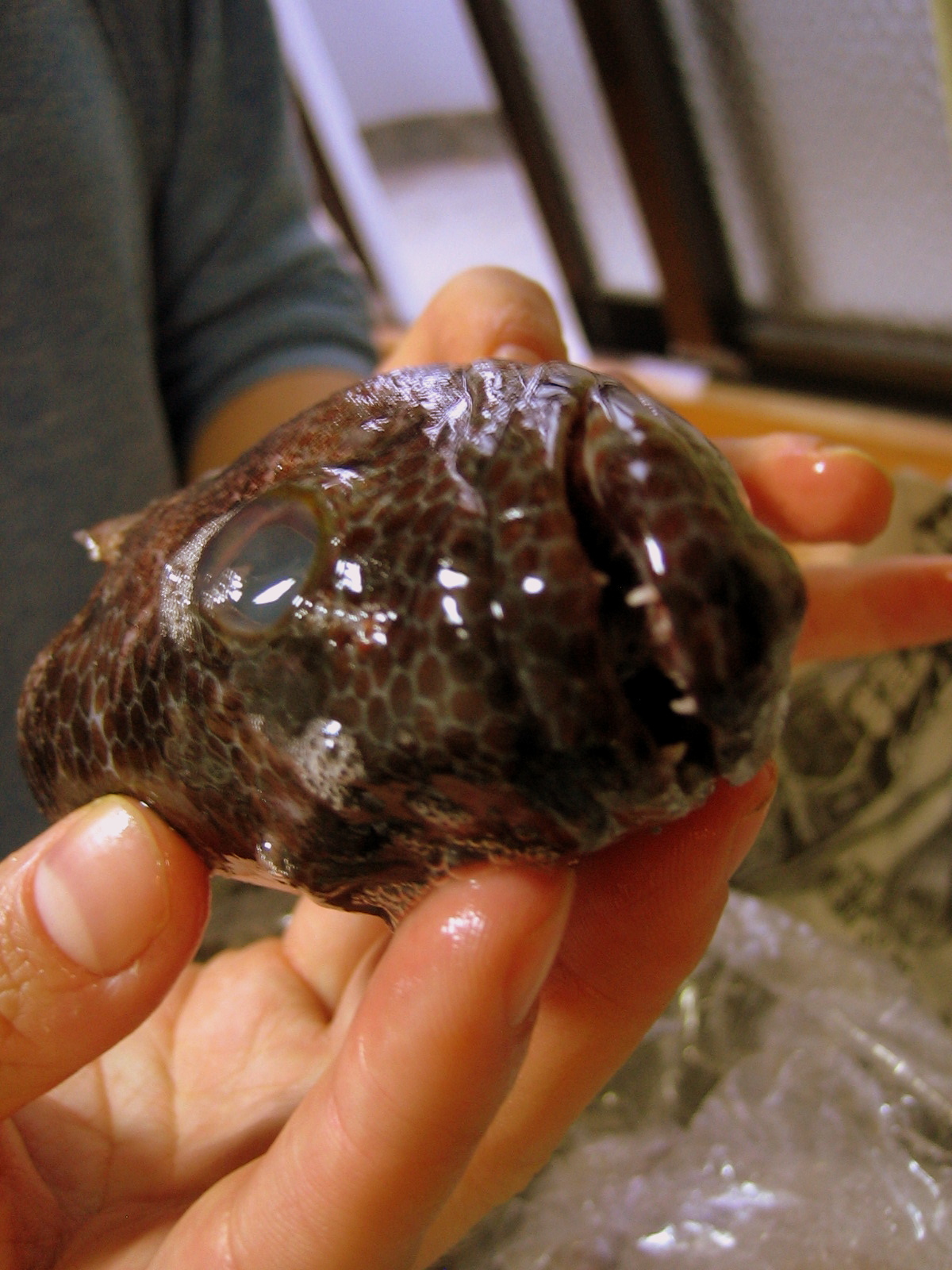
Here is the fish's head, after I unwrapped it from the newspaper:
この魚にした:

  
With this, I hoped to make a Okinawa-inflected bouillabaisse.
これで沖縄風の魚スープを作ろうと思った。

Any visitor to Okinawa has probably noticed the bottled utchin-cha, or turmeric tea in stores and vending machines. At my market, I found fresh, dirt-covered turmeric:
沖縄のウコン茶も有名で、市場でこのウコンがあった:

It resembles ginger, but cut open reveals a lovely golden hue:
ショウガと似てるけど、このきれいな黄色をしている:

I made the soup base with this, local onions, garlic, Okinawan bacon... and the fish's head:
それとタマネギ、ニンニク、沖縄産ベーコン、魚の頭:


To this, I added tomatoes and the local yellow carrots:
トマトと沖縄の黄色い人参:


Toward the end of the simmer, I added the rest of the fish.

I matched the stew with an island salad. The main green was handama:
島のサラダにハンダマという葉っぱ:
Also wrapped in news. I thought it rather poignant, considered that I feel wrapped up in news myself these days, literally rolled up inside of all that information.

To this, I added some beans:
それに煮たまめ:
Opened up to find:

I simmered the shucked beans in salt water...and added them to the greens, with some shaved carrots, avocado, and sashimi that the fishmonger had insisted I take with me.

Rotating the pots (only one burner in these temporary lodgings), the soup was finally ready:

I reserved the fish head for Sayaka and I to dissect, since we are animals like that.
We picked it clean...

I'm truly embarrassed to be safe on this island, surrounded by such bounty. If only I could send them fish stew, or at the very least some beer (poor Christopher!)
本当に東北に食事が足れない人々がいるので、このごちそうができて恥ずかしい。本当に頭を下げて、こころから「いただきます」を言って、みんなの安全のために祈っています。
I hope it doesn't come off as irreverent to those who are suffering from cold and hunger in the Northeast. To cook is the most powerful method I have to escape from the daily battering by the mass media, and it is with the deepest respect for the producers and the food itself that cook and eat.

In Japanese, the word used in the place of 'bon appetit' is literally the humble form for 'I eat.' With the greatest humility: itadakimasu.

2011年3月8日火曜日

Spring #1: Tiptoeing on Eggshells/ 春#1: 洗練されたらいいけど。。。

Spring! The other day a breeze carried me a hint of incipient spring so powerful that I felt downright drunk. That was quickly drizzled away, but it is undeniable that in pieces and patches spring is poking its way through to us here in Tokyo. 春!この間春の香の漂っていた風に出会った。少しずつ冬の気分が解けるでしょう。

Spring is a delicate season, marked (and marketed) by the ephemeral blossoms of the cherry -- the sakura. In spring, the Japanese nation gathers collectively underneath the pink clouds of sakura, and contemplate the transience of all earthly things as the fragile blossoms flutter down. 春の象徴は優美なさくらでしょう。それで春はつかの間の生について考える季節でしょう。

Funny how that contemplation seems to take the form of mass drunkenness in public parks, as people jostle for position under the cherry trees from early in the day, with their piles of boxed lunches, coolers packed with beer, and maybe even the occasional portable karaoke machine. 考える季節だけでもない。。。飲む季節でもあるの春:週末の上野公園の大衆はお弁当、ビールで朝早くから場所競争を。。。

But the culinary delicacies of nubile like a newly admitted college coed (the school year starts from spring in Japan), and just the palest green, like a cherry-blossom-contemplating drunkard. でも春の食べ物は確かに入学したばかりの女子学生のように自然、それにさくらを眺めている大酒飲みのように薄く緑色している。

For example:
 Tara no me: shoot of the angelica tree. たらの芽。
Yama udo: a relative of ginseng, apparently. 山ウド。
Both these shoots caught my eye at the local green grocer. Although once I got them home I didn't know what to do with them. Or, rather, I knew what I should do with them, but not how. I knew they should be battered and fried as tempura. But I don't know how to make tempura. And since I make it a point of pride that I like to improvise most everything I cook, I wasn't confident that I'd be able to "wing" tempura. この芽で春の目が覚めるとわかった。確かに天ぷらでおいしいでしょうね。でもレシビをよく無視して料理作るの私は天ぷらを挑戦でもいいかな。。。

I'm not really one for delicate cookery. I'll break down a duck. I'll flambé bananas. I'll braise a lamb's head. But follow a recipe? It's the great hurdle that has kept me from getting a handle on "real" Japanese cooking. 和食はがまんが必要。それで、もちろんレシピをちゃんと読んでから作るのも必要です。その理由で私に正式な和食は今でも不思議です。

But enough of these words. A whiff of spring and suddenly I fancy myself a literary lady. Basically, I decided to try to make this the most delicate meal I could possibly have the patience for. I picked three Japanese standards that I have never made: tempura, chawanmushi (a savory egg custard), and suimono (a delicate clear soup). それで、今回は和食挑戦にした:天ぷら、茶碗蒸し、吸い物。

I had the most elaborate fantasy for the chawanmushi. A little research showed me that it's actually a pretty simple dish, just eggs and broth, steamed. To make it even more delicate, I decided I wanted to try to serve it in eggshells. So how does one cut open an eggshell? I cut one slowly with a serrated knife, and at the last moment, it shattered, although remained mostly whole. The second, I attacked with two pins, blew out the insides and then tried to make a little perforation line around the top with the pin:
調べによると茶碗蒸しはそんなに大変なものじゃないので、茶碗より卵の殻に作ったらっと思った。一個をピンで穴を二つ作って、それで中身をだした。最後にピンできれいにあけ口を作れると思ったが。。。

Oh no! It shattered, too. But I had at least two imperfectly opened eggshells. あらっ!それでも使えた。

Chawanmushi is basically eggs, broth, and flavoring with a bit of mirin (sweet cooking sake) and perhaps citrus. I chose to use a little bit of sudachi. 茶碗蒸しにスダチを入れた。
A little grated rind went into the mix. 
Then this went into the eggshells and the eggshells went into the pot with water to steam. それで卵の殻に入れて、蒸し蒸し。。。

Here is the very unsexy photo of my scrambling to prevent all the custard from leaking from the egg with the pin holes, and struggling to improvise egg holders from jars. ちょっと大変だったけど。。。

In the meantime, I peeled the yama udo stalk and sliced it. I parboiled the slices, along with enoki mushrooms for the clear broth soup. それで、吸い物のために山ウドの皮を抜いて、湯通しておいた。

I arranged them in a bowl, as delicately as my clumsy hands could, and attempted a kind of elegant flourish with some sudachi rind. 吸い物の茶碗においた。

In the meantime, I began to worry about the tempura. I read that tempura batter requires very cold water, so I was chilling the water, and just generally worrying. それから、天ぷらのことについて心配し始まった。本当に揚げ物の初心者であるので。。。

What kind of an alchemy is tempura? One that still eludes me. The batter was mixed, the oil was heated, and tested with a bit of batter. The glob went halfway down, then floated up. I coated up a shoot, and dipped it in the oil. It emerged a sassy green, but with no tempura aura. あまり結果が。。。天ぷららしくなかった。

Vaguely tempura-ish fried tara no me. Well, at least the soup's up, and it looks okay...
ま。せめて吸い物は。。。
Ah... delicate. And the chawanmushi?それで茶碗蒸しは?
With a bit of dramatic tobikko (which I also used to great effect here), it turned out to save the show. トビッコに合わせたら、悪くはなかった。

But these simple delicacies still elude me. The mysteries are deep....
Murky...
And dark... like this vision that confronted me in the used oil...
A universe in a frying pan.

ごちそうさまでした!

2011年2月28日月曜日

Winter #4: California Love / 冬#4:カリフォルニアのラブ

It was my great fortune to be able to spend some time in California this February. California in February makes me wonder why I ever bother to go anywhere else. And not least of all because of the glorious produce. Kale, chard, brussel sprouts, citrus... I was in a tizzy. For seasoning, all I had to do was step out the back door to find lavender, parsley, laurel, and modest jungle of rosemary.
2月に出身のカリフォルニアに帰ることができた。あ。。。2月のカリフォルニア。確かにカリフォルニアドリームだよ。冬の青物もオレンジやレモンもおいしいよ!パーブが必要ならうちの庭でもラベンダー、ゲッケイジュ、パセリー。ローズマリーももちろん。


Beets fetched an extravagant 10USD a root at my local supermarket in Tokyo, so I set out to eat as many beets as possible. My friend Namita (not this Namita) told me about a beet recipe from a show she keeps yapping on about called "Diary of a Foodie". At first I misheard her, and thought the show was called "Diarrhea of a Foodie." That made perfect sense to me, given my experiences with street food from Mexico City to Phnom Penh, but it did seem a rather daring title for a mainstream cooking show. In any case, the point is that once Namita had me thinking about salt-encased beets I knew I had to make some.
東京でビーツを買おうと思っても880円ぐらいかかるのでカリフォルニアに着いてからすぐビーツを食べたかった。友人のナミタから塩に包んだビーツというレシピを聞いたら、是非そのような食べ方を試したいと思った。

A little research yielded the following: mix egg whites with salt, black peppercorns, and herbs (I opted for lavender and rosemary). 塩に卵の白身、ペーパー、ハーブ(私はラベンダーとローズマリーにした)。

Mix it up...混ぜる。。。
Stick your unpeeled beets in a pan with this grit (oh, and I added a celery root).
ペーツ(セロリーの根も仲間に入れた)をこの塩砂に入れる。。。

 Now encase what looks like an alien creeping up from the mud in the salt mix. それでこの蛸のようか宇宙人のようかベーツを塩砂に包む。

 
Bake about 2 hours. 2時かんほど焼く!

Now it looks like your martian is firmly buried on the surface of the moon. それで宇宙人みたいのビーツは月面みたいのスフレに入っているみたいになるとできた。

These beets ended up in a wilted chard and salad for a potluck reunion hosted by Bonnie. このベーツは大学の友人のボニーが行った集まりのサラダに使った。

But I had other plans for the celery root. でもセロリー根に特別な計画あった。

When I'm home, sometimes it's nice to flip the generational relations and pretend to be my parents' grandmother. I guess that would make my parents siblings. Well: maybe I'd just be an affectionate old auntie. But I do like to spend all day in their expansive kitchen, making up goodies in anticipation of them coming home from school. たまに帰るとき、両親のためにおばあちゃんの役割を演じるのが好き。一日中うちの広い台所でおいしいもののいろいろを作りながら。。。

This time I went for the Italian grandmother thing. Tonight the focus would be fagotelli -- stuffed pasta -- with a celery root, parsley, walnut filling.
今回はイタリア系おばあスタイル。フォゴッテリパスタ:セロリ根、パセリ、クルミ入り。

Using the salt-baked celery root, I blended it with parsley, walnuts, olive oil. Basically until it tasted like the most luscious avocado. 塩で焼いたセロリ根にパセリ、クルミ、オリブ油。

To make fagotelli: Prepare the pasta dough (from scratch, naturally) with the egg yolks left from the egg white used in the salt bake, and cut into rectangles. 長方形に切った手作りパスタ生地。
Stuff. 中身を入り。
Fold. 折り。
Repeat. 終わり。
Here are my cute little fagotellis. ジャーン。

To go with these, I planned heaps and heaps of vegetables. First of all, the beet greens I had reserved from the beets could not go to waste. パスタに合わせる野菜のいろいろも作らなきゃ。まずはビーツの青物。

The red stalks of the beet greens made a nice relish when finely chopped and sauteed withvinegar.
赤い部分を細く切って、お酢で煮た。
I wilted the leaves, reserving only the cutest ones for garnishes.
Kale: wilted for salad. Tomatoes: pan roasted for a side. Beef: broiled. (Beef is a vegetable, right?)
ケール:焼いた。トマト:焼いた。ビーフ:焼いた。
At hand I had a colorful California palate to paint the plates. それでお皿に。
It's an interactive medium.
So eat your greens...
And your reds and your yellows.
Buon appetito! ごちそうさま!