ラベル salad の投稿を表示しています。 すべての投稿を表示

2011年3月18日金曜日

Okinawa Exile #1: An Embarrassment of Riches / 沖縄#1:大学院生避難所

At four p.m. last Friday, March 11, I landed in Naha Airport. I greeted my friend Sayaka, and she asked me if I had heard about the earthquake. About a day previous, there had been a long but mild tremor in Tokyo. The epicenter had been in the Northeast, and my friend in Sendai had changed his facebook photo to a cartoon of a namazu, the giant catfish of Japanese myth that lives under the earth and makes it rumble.
先週の金曜日、午後4時に、那覇に着きました。空港まで迎えに来た友人(さやか)に「地震のことを聞いた」って聞かれたら、このホラー映画が始まった。

  
But Sayaka didn't mean that earthquake. She meant the one that hit shortly after I took off from Haneda Airport. She pulled me over to the television screen in the terminal. The tsunami had just hit the Northeast. Reporters were disheveled, and a map of Japan blinked red, pink, orange to indicate the tsunami risk along the coasts of the archipelago.
テレビのライブ放送を見て、津波の直後の映像が映った。日本の地図は赤、ピンク、オレンジの色で光っていた。津波の警告を指していた。

The plan had been to get in the car and head off to the north side of Okinawa, but the graphic on the news blinked away merrily, in pink.

We went back to Sayaka's place, and there we (with Sayaka's partner Colm) watched the news. Reporters were all wearing white helmets (and they would do this for a while), and slowly the first reports of casualties trickled in. It was so hard to know the magnitude of the disaster. Initially there were only reports of an elderly man who died of shock, or a woman gone missing in a supermarket. I guess I don't have to tell you in detail about subsequent developments, or describe the footage we've all seen of terrifying walls of water. I can't yet tell if the repeated viewings of the catastrophe made it feel more or less real to me...
さやかのアパートに行って、テレビを見た。まだ死亡の報告がまだ1人ずつで、まだ大丈夫じゃないかなーと思った。今から考えると非常に甘え考えだった。

My original plan was to return to Tokyo on Wednesday evening, but as we watched the footage coming from the nuclear plant in Fukushima, it seemed wise to extend my stay in Okinawa. From reports from friends in Tokyo, the fear and pressure from family, friends, and authorities from abroad were quite trying, and those who had the means to do so relocated to Western Japan or further. It seemed to improve their mental health, at the very least, and relieved pressure on the infrastructure in the capital.
沖縄は5日間の旅行だけという予定だったが、また福島の事故があって、ちょとだけ那覇の滞在を長引いた。東京に残った友達のたくさんは両親や友人の心配に応じて関西に移った。東京でも体が安全だっても、精神的に安心できなかったという人も少なかった。

In the past week, I've experienced too many emotions to relate here. Mostly, I'm so relieved that Christopher and Nori in Sendai are safe and are working hard to coordinate getting help to those in need in their community. I feel a little bit like I want to go home to California and get a hug. But I'm also eager to go back to Tokyo and get on with my life and research (and get a hug). But to all those worried about me: I could not be safer than here in Naha.
今週にいろんな複雑な感情があった。。。疲れて、帰国しようという時もあれば、もう早く東京に帰りたいと強く感じる時もある。

So it is a confusing, uncertain time. But one thing is for sure, even when the mind is mixed up, there is the body that needs to be taken care of, and fed. Nothing makes me happier than to have people to cook for... And now that Ryan has also joined this community of graduate school refugees (and brought my passport!), I'm happy to turn to the issue of food. So let's give words a break for a moment, and turn to more earthy needs...
複雑な時期だというのは確かだ。とりあえず頭を使わないときに、まず体を大事しなければならないと思う。それで、このブログを。。。

Near the place where I am staying is a market. It's got a postwar black market feel. But alongside butchers that sell every cut of a pig and vegetable stands hawking their exotic foliage are small drinking establishments and hip coffee stalls.
今泊まっているところのすぐ近くに栄町市場というマーケットがある。戦後の直後の昭和の味がある。

The fishmonger I usually visit helps me pick fish based on what I want to make. The other day, when Ryan and I stopped by, he broke a baked sweet potato open for us, and we three stood around the trash can gnawing on the insides while throwing scraps of burnt potato skins into the can. We got a fish for a stew.
行っている魚屋さんがいつもどんな料理にどんな魚が適当かと教えてくれる。この間、ライヤンと一緒に行ったら、焼き芋もいただいて、それを食いながら魚を決めた。

Here is the fish's head, after I unwrapped it from the newspaper:
この魚にした:
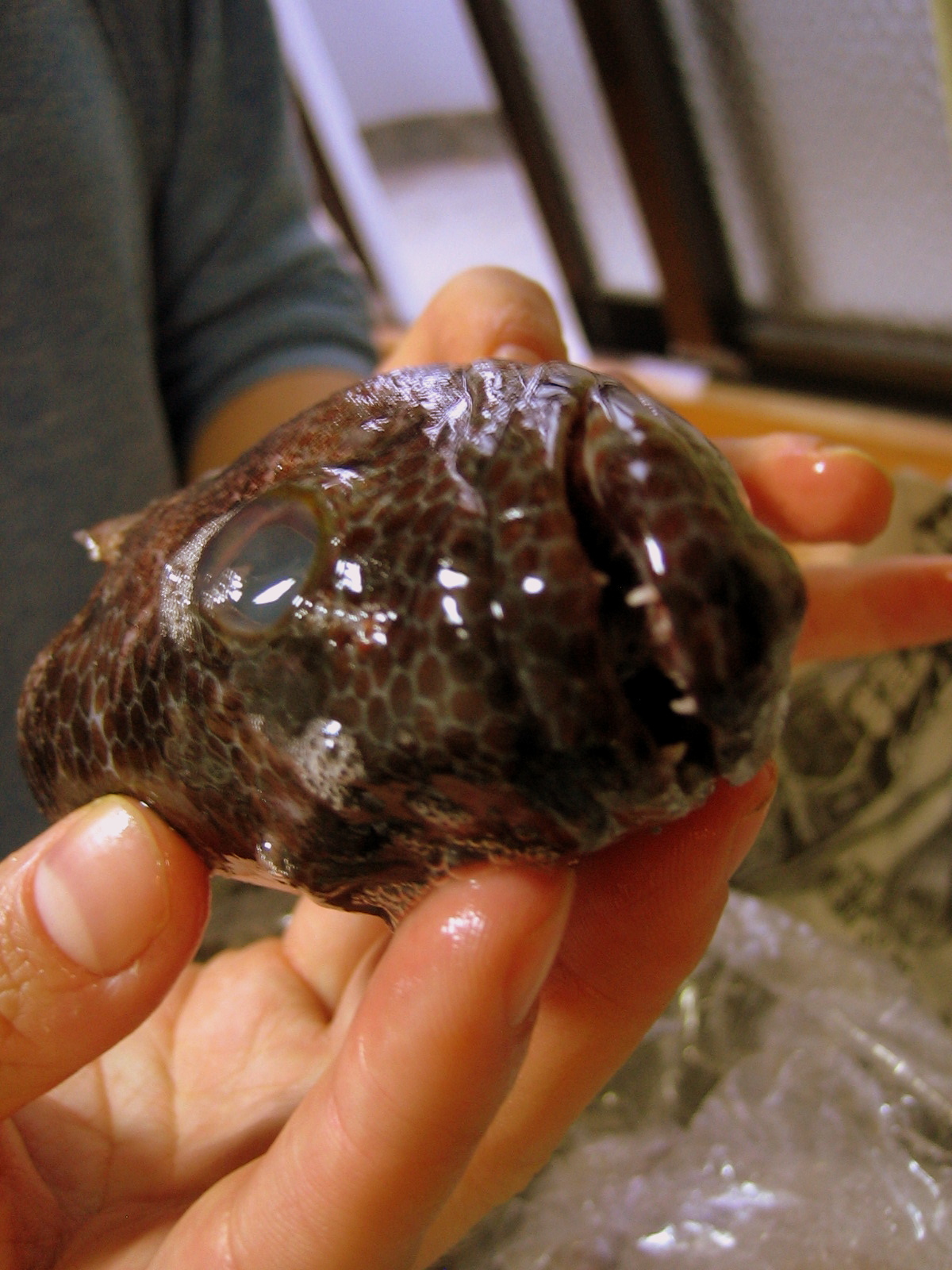
  
With this, I hoped to make a Okinawa-inflected bouillabaisse.
これで沖縄風の魚スープを作ろうと思った。

Any visitor to Okinawa has probably noticed the bottled utchin-cha, or turmeric tea in stores and vending machines. At my market, I found fresh, dirt-covered turmeric:
沖縄のウコン茶も有名で、市場でこのウコンがあった:

It resembles ginger, but cut open reveals a lovely golden hue:
ショウガと似てるけど、このきれいな黄色をしている:

I made the soup base with this, local onions, garlic, Okinawan bacon... and the fish's head:
それとタマネギ、ニンニク、沖縄産ベーコン、魚の頭:


To this, I added tomatoes and the local yellow carrots:
トマトと沖縄の黄色い人参:


Toward the end of the simmer, I added the rest of the fish.

I matched the stew with an island salad. The main green was handama:
島のサラダにハンダマという葉っぱ:
Also wrapped in news. I thought it rather poignant, considered that I feel wrapped up in news myself these days, literally rolled up inside of all that information.

To this, I added some beans:
それに煮たまめ:
Opened up to find:

I simmered the shucked beans in salt water...and added them to the greens, with some shaved carrots, avocado, and sashimi that the fishmonger had insisted I take with me.

Rotating the pots (only one burner in these temporary lodgings), the soup was finally ready:

I reserved the fish head for Sayaka and I to dissect, since we are animals like that.
We picked it clean...

I'm truly embarrassed to be safe on this island, surrounded by such bounty. If only I could send them fish stew, or at the very least some beer (poor Christopher!)
本当に東北に食事が足れない人々がいるので、このごちそうができて恥ずかしい。本当に頭を下げて、こころから「いただきます」を言って、みんなの安全のために祈っています。

I hope it doesn't come off as irreverent to those who are suffering from cold and hunger in the Northeast. To cook is the most powerful method I have to escape from the daily battering by the mass media, and it is with the deepest respect for the producers and the food itself that cook and eat.

In Japanese, the word used in the place of 'bon appetit' is literally the humble form for 'I eat.' With the greatest humility: itadakimasu.

2011年2月28日月曜日

Winter #4: California Love / 冬#4:カリフォルニアのラブ

It was my great fortune to be able to spend some time in California this February. California in February makes me wonder why I ever bother to go anywhere else. And not least of all because of the glorious produce. Kale, chard, brussel sprouts, citrus... I was in a tizzy. For seasoning, all I had to do was step out the back door to find lavender, parsley, laurel, and modest jungle of rosemary.
2月に出身のカリフォルニアに帰ることができた。あ。。。2月のカリフォルニア。確かにカリフォルニアドリームだよ。冬の青物もオレンジやレモンもおいしいよ!パーブが必要ならうちの庭でもラベンダー、ゲッケイジュ、パセリー。ローズマリーももちろん。


Beets fetched an extravagant 10USD a root at my local supermarket in Tokyo, so I set out to eat as many beets as possible. My friend Namita (not this Namita) told me about a beet recipe from a show she keeps yapping on about called "Diary of a Foodie". At first I misheard her, and thought the show was called "Diarrhea of a Foodie." That made perfect sense to me, given my experiences with street food from Mexico City to Phnom Penh, but it did seem a rather daring title for a mainstream cooking show. In any case, the point is that once Namita had me thinking about salt-encased beets I knew I had to make some.
東京でビーツを買おうと思っても880円ぐらいかかるのでカリフォルニアに着いてからすぐビーツを食べたかった。友人のナミタから塩に包んだビーツというレシピを聞いたら、是非そのような食べ方を試したいと思った。

A little research yielded the following: mix egg whites with salt, black peppercorns, and herbs (I opted for lavender and rosemary). 塩に卵の白身、ペーパー、ハーブ(私はラベンダーとローズマリーにした)。

Mix it up...混ぜる。。。
Stick your unpeeled beets in a pan with this grit (oh, and I added a celery root).
ペーツ(セロリーの根も仲間に入れた)をこの塩砂に入れる。。。

 Now encase what looks like an alien creeping up from the mud in the salt mix. それでこの蛸のようか宇宙人のようかベーツを塩砂に包む。

 
Bake about 2 hours. 2時かんほど焼く!

Now it looks like your martian is firmly buried on the surface of the moon. それで宇宙人みたいのビーツは月面みたいのスフレに入っているみたいになるとできた。

These beets ended up in a wilted chard and salad for a potluck reunion hosted by Bonnie. このベーツは大学の友人のボニーが行った集まりのサラダに使った。

But I had other plans for the celery root. でもセロリー根に特別な計画あった。

When I'm home, sometimes it's nice to flip the generational relations and pretend to be my parents' grandmother. I guess that would make my parents siblings. Well: maybe I'd just be an affectionate old auntie. But I do like to spend all day in their expansive kitchen, making up goodies in anticipation of them coming home from school. たまに帰るとき、両親のためにおばあちゃんの役割を演じるのが好き。一日中うちの広い台所でおいしいもののいろいろを作りながら。。。

This time I went for the Italian grandmother thing. Tonight the focus would be fagotelli -- stuffed pasta -- with a celery root, parsley, walnut filling.
今回はイタリア系おばあスタイル。フォゴッテリパスタ:セロリ根、パセリ、クルミ入り。

Using the salt-baked celery root, I blended it with parsley, walnuts, olive oil. Basically until it tasted like the most luscious avocado. 塩で焼いたセロリ根にパセリ、クルミ、オリブ油。

To make fagotelli: Prepare the pasta dough (from scratch, naturally) with the egg yolks left from the egg white used in the salt bake, and cut into rectangles. 長方形に切った手作りパスタ生地。
Stuff. 中身を入り。
Fold. 折り。
Repeat. 終わり。
Here are my cute little fagotellis. ジャーン。

To go with these, I planned heaps and heaps of vegetables. First of all, the beet greens I had reserved from the beets could not go to waste. パスタに合わせる野菜のいろいろも作らなきゃ。まずはビーツの青物。

The red stalks of the beet greens made a nice relish when finely chopped and sauteed withvinegar.
赤い部分を細く切って、お酢で煮た。
I wilted the leaves, reserving only the cutest ones for garnishes.
Kale: wilted for salad. Tomatoes: pan roasted for a side. Beef: broiled. (Beef is a vegetable, right?)
ケール:焼いた。トマト:焼いた。ビーフ:焼いた。
At hand I had a colorful California palate to paint the plates. それでお皿に。
It's an interactive medium.
So eat your greens...
And your reds and your yellows.
Buon appetito! ごちそうさま!

2010年10月27日水曜日

Autumn #11: Going Underground with Wasabi / 秋#11:地下に潜る、わさびと

As autumn evenings get colder and colder, and we edge into the winter months, root vegetables really shine. There are lots of radical roots, of course. But nothing quite as extreme as the infamous wasabi.
だんだん秋の夕方は寒くなって、もうそろそろ根菜類の季節だな。地下からいろんなおいしさもらえるけど、過激さで言えばわさびが一番でしょう。


This was the line-up facing me on my recent visit to the farmers' market. The farmer himself was grating a stick of wasabi at the stand and offered me a smudge. "Go ahead, it won't kill you," were his words of encouragement.
市場で容疑者の列。農業さんにおろしたばかりわさびをもらちゃって。口を入れたら、「大丈夫よ。死なないよ。」っという励まし。

I liked the bite, and the very green flavor of an absolutely fresh wasabi. It was exciting.
緑の味!鼻に来るぴりぴり。

I decided to take one into my home. 一個を持ち帰り。


Cut in half...半分にしたら。。。


I decided that I would grate up some wasabi meat and make a dressing: a radical use for a radical root, with which I could very lightly dress some naked veggies. Kind of a return to my own California roots...
わさびおろしでドレッシングを!


Fresh wasabi renders a much softer kick than the tube kind, and the color is also more delicate.チューブで買うわさびより味も色も穏やか。

I added some lemon juice, salt, sugar, and olive oil.
これにレモン、塩、砂糖、オリーブオイル。


Totally radical. 過激な緑!

As a side dish to the salad, I made a little flavored rice, based on the recipe found here. サラダに合わせるご飯でキノコご飯を作った。

More than once, I've been captivated watching a Japanese friend wield a knife to render slices of carrots into sakura blossoms. My own efforts were less fluent.
何回も日本人の友達が人参を桜形に切ることを見るだけで夢中という体験あり。自分の手際は。。。


Maybe if I sent it home to my parents, they'd put it on the fridge. Only after asking me if it was supposed to be a fat man running to catch the bus, however. A crowd of these fat men would put anyone off of their meal. So I went abstract.
桜より走っているデブさん?やだね。それで、さくらを抽象的なチェル的なように。。。


Not my proudest moment, but I did manage some kind of flower-like shapes. 何となく。


These went into my rice cooker with some soy sauce, konbu, sake, mirin. Also I included some lovely fall mushrooms.
この曖昧に花のような形の人参と醤油、昆布、酒、みりん。キノコも。


The result was a happy little side bowl of rice. It was content to play the silent support to my more outspoken salad.
これでぴりぴりわさびサラダぴったり。


意義なし!

2010年9月29日水曜日

Autumn #4: Miniature Tea Eggs and Chrysanthemum Sunomono / 秋#4:茶玉子と菊の酢の物

The other day I noticed flowers being sold at my local greengrocer. Chrysanthemums, to be specific.
この間うちの近くにある八百屋が花を売っていることを発見しました。近寄ると:あっ!菊だ!
I'd never cooked with chrysanthemums before, so I asked the little old lady how I should go about preparing them. She recommended sunomono -- a vinegared Japanese-style side salad. 菊を料理に使ったことない私だから、お店のおばちゃんと相談した。彼女のおすすめ:酢の物。

Sunomono is quite simple really, it just calls for equal parts rice vinegar and mirin (sweet cooking sake), and a touch of salt. I decided to jazz it up, and take the opportunity to tackle a recipe I've been biting at the bit to get to. 酢の物は本当にシンプルで、ちょっとだけチェル的にしようかな。。。

Ever since I saw this recipe, I knew I had to try it. このレシピを見た瞬間、私も絶対作りたいと思った。

Tea-glazed eggs. 茶玉子。

But when I got to the poultry store, delicate little gems beckoned me away from those ungainly, vulgar chicken eggs...
でも鶏肉屋に入ったら、このちびっ子に誘われた。。。
The little masochists begged me to boil them and crack them and boil them again. How could I resist? I'm only human...
この誘いなので、抵抗できなかった。。。

So I boiled them for half a minute or so to set them, cracked them with the back of a spoon, and then put them back in the pot, this time joined by soy sauce, darjeeling tea, star anise, and a splash of mirin. And I let them boil...
そして30秒ぐらいゆでて、出して、スプーンで軽く割れ目を殻につけって、またお湯に戻した。この時に醤油、ダージェリング茶、スターアニス、みりんも入れました。
And boiled them and boiled them, for close to two hours.このまま2時間近くゆでた。
And when the came out, they were scarred - but also somehow more hauntingly beautiful. And also more delicious.
だしたらちょっと不気味な美しさ。。。でも確かのおいしさ。
I wasn't through with them yet. I prepared a beautiful bed of sunomono made from slivers of mitsuba (Japanese wild parsley), okra, red onion, and the chrysanthemum petals, which I plucked from the flowers and doused in hot water before adding to the mix. このミニ茶玉子をチェル的な酢の物を!みつば、オクラ、赤いタマネギを細く切って、菊の花弁も湯通ししてから入れた。

Autumn is a sad season of endings, a season of bitter experience: the spring chicken gets fattened to become winter's warming soup. But with experience comes...
秋は切ない季節です。終局を感じられる季節。それでも。。。

Deliciousness.
おいしい。

ごちそうさまでした。